Digitalisation in agriculture
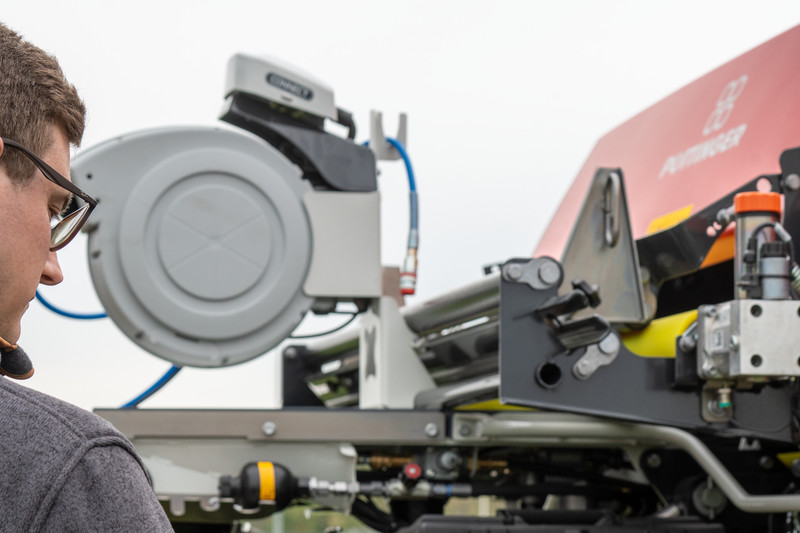
Digitalisation in agriculture is about advanced working methods designed to improve output, use resources more efficiently, and promote more sustainable farming.
For example, key agronomic data such as performance per field for each process, yield mapping, and site-specific seed rates, can be recorded digitally.
Digitalisation brings together three strategies:
Digital farming
Digital farming is about the extensive use of software applications in agriculture. This makes the most of developments involving AI, cloud systems, automation and robotics.
Smart farming
Also referred to as Agriculture 4.0, smart farming is about precise and optimised working practices that make use of things like sensor-based real-time systems for the application of fertiliser or plant protection products. Thanks to accurate and real-time data transmission, sensor technology can, for example, detect the biomass distribution of a crop and apply the right amount of fertiliser.
Precision farming
The first precision farming applications were introduced back in the early 1990 s, with the aim of increasing production efficiency using digital hardware and software solutions.
Precision farming is about the site-specific management of farmland using intelligent technology.
Examples of precision farming include guidance systems and automated section control.